Why Tidying Always Fails
Every household that has organised the same cupboard three times is not short of discipline. It is short of design.
Spatial Harmony3 min read
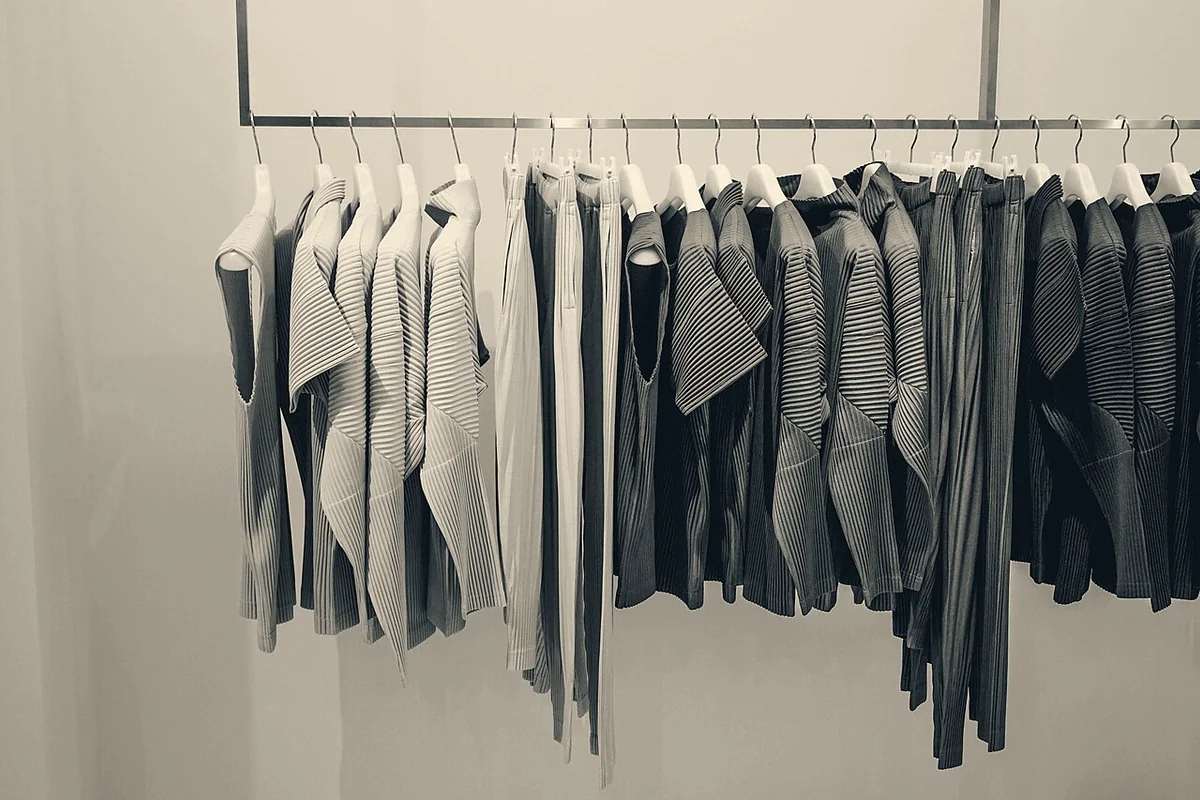
Almost every client we meet has already organised their home. Often several times. They have given up a weekend, emptied a wardrobe onto a bed, sorted everything into neat categories, and put it all back looking immaculate. Three weeks later the wardrobe is exactly as it was.
The conclusion most people draw from this is that they lack discipline. It is the wrong conclusion, and it is an expensive one, because it sends them back to do the same thing again.
A tidy is a restoration, not a change
When you tidy, you return a space to a previous state. You do not alter the conditions that produced the current one. The cupboard was full before you started and it is full again when you finish — the contents are simply better arranged within the same constraint. Nothing about the capacity, the return path, or the daily transaction count has changed. The space will drift back, because every force acting on it is unchanged.
This is why the failure is so predictable, and why it feels so personal. The household did real work, saw a real improvement, and watched it dissolve. The natural reading is that something is wrong with them. In fact the arrangement was never load-bearing to begin with.
What actually drives the drift
When we run a behavioural audit, the same four causes account for the overwhelming majority of collapsed arrangements:
- The zone runs at or near full capacity. A system with no slack fails the first time something new arrives, and something new always arrives.
- The return path is longer than the path to the floor. If putting an item away takes four actions and dropping it takes one, the floor wins on a bad day — and most days are slightly bad.
- The category boundaries are invisible. If only the person who created the arrangement knows where things belong, every other member of the household is guessing.
- The arrangement was designed around how the household ought to behave. Aspirational systems fail on contact with actual behaviour, reliably and quickly.
None of these are character flaws. All of them are specification errors.
Engineering the conditions instead
The alternative is to treat the home as a system with measurable properties and to change those properties deliberately. We count the asset footprint so the capacity question stops being a matter of opinion. We observe the real routines, including the inconvenient ones, and design around those rather than around an idealised version of the household. We set a capacity ceiling for each zone with deliberate spare room, and we make the return path shorter than the alternative.
Then we document it, because a framework that lives only in one person's head is not a framework. It is a habit, and habits do not transfer to the rest of the family.
The test that matters
There is only one honest measure of this work, and it is not how the home looks on handover day. Any competent pair of hands can make a wardrobe photograph well. The measure is what the home looks like on an ordinary Thursday, four months later, after a difficult week nobody planned for.
If it has held, the design was sound. If it has drifted, the design was wrong — and that is our fault, not the household's. We go back and recalibrate it, because the only system worth building is one that does not depend on anyone being at their best.
Keep reading
More from the Journal
 Method
Design for Behaviour, Not for Photographs
A beautifully styled pantry and a functional one are two different objects. Only one of them survives a Tuesday.
Spatial Harmony · 3 min read
 Method
The Asset Footprint Audit
Most homes are not short of storage. They are short of knowledge about what they own — and that gap is measurable.
Spatial Harmony · 4 min read
 Systems
 That Survive a Bad Week
A framework that only holds when the household is at its best is not a framework. It is a performance.
Spatial Harmony · 4 min read
Next step
Begin with a study, not a clear-out
Tell us which rooms have stopped working and we will walk you through the audit, the design brief and the deployment window. No obligation, no sales pressure, and nothing thrown away without your word.